You Won’t Believe What This City’s Buildings Are Hiding
La Paz, Bolivia, isn’t just about altitude and markets—it’s an architectural wonder. Nestled in a deep canyon, the city blends colonial facades, indigenous design, and modern chaos in ways that feel almost unreal. I’ve never seen buildings cling to hillsides so dramatically or colors explode so vividly. Every street tells a story through its structures. This is urban design pushed to the edge—literally. If you think architecture is boring, La Paz will change your mind.
Arrival: First Impressions from the Air
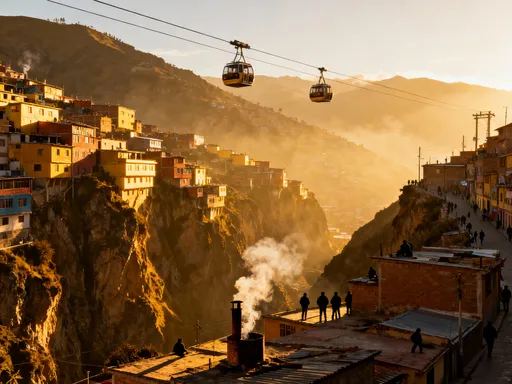
As the plane descends toward El Alto International Airport, the first thing that strikes visitors is not the thinness of the air, but the sheer audacity of the city’s layout. Spread across a vast Andean plateau and plunging into a deep, bowl-like valley, La Paz unfolds beneath the wing like a sprawling mosaic defying gravity. At 4,058 meters above sea level, El Alto sits among the highest urban airports in the world, and the dramatic elevation drop—over 400 meters from airport to downtown—immediately signals that this is no ordinary city. The buildings appear stacked, crammed, and cascading down the steep slopes, each structure seemingly balancing on the one below it. From above, neighborhoods resemble terraced gardens more than traditional city blocks, a testament to human ingenuity in extreme topography.
What becomes clear even before landing is how transportation shapes the skyline. Brightly colored cable cars—part of the city’s Mi Teleférico system—glide silently across the valley, connecting distant neighborhoods with smooth, elevated arcs. These skyward routes offer a unique perspective: one can see rooftops used as courtyards, narrow staircases replacing streets, and homes built so close together they share walls and breath. The early morning light catches the vivid hues of facades—turquoise, crimson, sunflower yellow—painting the hillsides in a palette that feels both joyful and defiant. It’s a city that doesn’t just adapt to its environment; it dances with it.
The arrival experience underscores a fundamental truth about La Paz: architecture here is not a luxury or aesthetic choice—it’s a necessity born of survival and community. With limited flat land and relentless population growth, every square meter is contested and creatively used. Even the airport terminal, modern and functional, sits on the edge of a plateau, its windows framing a dizzying view of the city below. As travelers step off the plane and feel the crisp, rarefied air, they’re not just entering a new country—they’re stepping into a vertical world where buildings don’t merely stand; they climb, cling, and evolve.
The Heart of the City: Colonial Meets Chaos in Murillo Square
At the geographic and symbolic center of La Paz lies Plaza Murillo, a space where history, power, and urban life converge. Encircled by Bolivia’s most important political and religious institutions—the Presidential Palace, the Cathedral of La Paz, and the Plurinational Legislative Assembly—the square is a rare flat expanse in a city defined by slopes. Its orderly layout, with symmetrical walkways and neoclassical facades, reflects the Spanish colonial ambition to impose geometric control on the natural landscape. Yet just beyond the plaza’s perimeter, that order dissolves into a vibrant, chaotic web of streets, markets, and multi-level buildings that seem to grow organically from the rock itself.
The contrast is striking. On one side, the Presidential Palace stands with its stone columns and wrought-iron balconies, a remnant of 19th-century grandeur. Its architecture speaks of stability, authority, and European influence. Across the square, the La Paz Cathedral, completed in the early 1800s, blends Baroque and Neoclassical elements, its twin bell towers rising like sentinels over the city. These structures were designed to endure, built with thick walls and enduring materials to withstand both time and earthquakes. And yet, they now serve as anchors in a sea of constant motion—surrounded by street vendors, political demonstrators, and a constant flow of pedestrians navigating uneven cobblestones.
What makes Plaza Murillo so compelling is not just its historical significance, but how it remains relevant. While many colonial plazas in Latin America have become tourist relics, this one pulses with daily life. Government workers hurry past, mothers carry children in traditional woven slings, and local artisans sell handmade crafts on folding tables. The surrounding buildings, though centuries old, have adapted. Ground floors once reserved for elite residences now house banks, pharmacies, and cafés. Upper stories serve as offices or apartments. This layering of function—past and present, public and private—mirrors the city’s broader architectural philosophy: preservation through adaptation.
The use of traditional materials—stone, adobe, and iron—continues to influence modern construction in the area. Even newer buildings incorporate arched windows, tiled roofs, and decorative railings that echo colonial styles. This continuity is not merely aesthetic; it reflects a cultural commitment to identity. In a city shaped by indigenous Aymara and Quechua populations as much as by Spanish heritage, architecture becomes a language of coexistence. Plaza Murillo, therefore, is more than a landmark. It is a living example of how historical design can remain central not by resisting change, but by embracing it.
Cable Cars and Urban Flow: Mobility That Shapes Architecture
If there is one innovation that has redefined La Paz’s architectural landscape in the 21st century, it is the Mi Teleférico cable car system. More than just a mode of transportation, this network of bright red, yellow, green, and blue lines has become a spine for urban development, transforming isolated hillside communities into accessible, connected neighborhoods. Launched in 2014, Mi Teleférico was initially designed to ease traffic congestion and reduce commute times in a city where roads twist unpredictably and buses struggle with altitude and steep grades. But its impact has gone far beyond mobility—it has reshaped how people live, build, and imagine their city.
Each cable car line connects key zones, from El Alto in the west to the southern districts of Irpavi and Calacoto. Stations are elevated, modern structures with glass walls and solar panels, often serving as community hubs with information centers and small markets. Their placement has triggered a wave of construction in previously underserved areas. New apartment complexes, schools, and clinics have sprung up within walking distance of stations, creating what urban planners call “transit-oriented development.” This shift has encouraged vertical growth—multi-story buildings with shared staircases and compact units—because land remains scarce and expensive.
The color-coded lines do more than guide navigation; they create identity. Residents identify with their line—“I’m on the red line”—much like people in other cities identify with subway stops. This sense of belonging influences architecture too. Buildings near stations often incorporate the line’s color into facades, signage, and public art. A yellow awning here, a green door there—the city’s palette becomes both functional and symbolic. Moreover, the cable cars offer an unparalleled view of urban form. From above, one sees how homes are stacked like bricks, how staircases zigzag between levels, and how open spaces are carved out of impossible slopes.
Perhaps most importantly, Mi Teleférico has made architecture more inclusive. Before the system, many hillside neighborhoods were cut off, accessible only by long, exhausting climbs. Now, elderly residents, children, and working families can move freely, which in turn affects building design. With better access, homes are no longer built solely for survival; they can include balconies, windows for natural light, and even small gardens. The cable cars have not erased inequality, but they have created a more connected city—one where architecture responds not just to terrain, but to human dignity.
Witches’ Market and Beyond: Buildings with Purpose and Personality
Winding through the narrow streets of La Paz’s city center, one arrives at the Mercado de las Brujas, or Witches’ Market, a place where architecture serves not just shelter, but belief. This cluster of low-rise stalls and open-front shops may not look impressive at first glance—many are little more than wooden frames covered with corrugated metal—but their design is deeply intentional. Each structure opens directly onto the sidewalk, blurring the line between public and private, commerce and ritual. Hand-painted signs depict moons, llamas, and ancient deities, while shelves overflow with dried herbs, amulets, and ceremonial items used in Aymara spiritual practices.
What makes this market architecturally unique is how form follows function and faith. The buildings are not grand, but they are expressive. Facades are adorned with symbols of Pachamama (Mother Earth), Bolivian flags, and intricate textiles that serve as both decoration and spiritual protection. Some shop owners hang miniature altars outside their doors, turning the exterior wall into a sacred space. Others use color boldly—deep reds for energy, bright yellows for prosperity—believing that the vibrancy of a building influences its energy. This integration of spirituality into design is rare in modern cities, yet here it feels natural, even necessary.
The market’s layout reflects centuries of indigenous tradition. Unlike planned plazas or grid-based streets, the Mercado de las Brujas grew organically, with stalls added piece by piece as demand increased. Aisles are narrow, sometimes barely wide enough for two people to pass, creating an intimate, almost sacred atmosphere. Roofs are low, encouraging quiet conversation and close interaction. There are no large signs or corporate branding—each shop is personal, often family-run for generations. This human scale makes the architecture feel alive, responsive to the rhythms of daily life.
Moreover, the market demonstrates how commercial buildings in La Paz are designed for flexibility. Many stalls can be closed with folding metal shutters, transforming a shop into a secure home at night. Others have upper floors used as living quarters, continuing the tradition of mixed-use spaces common in Latin American cities. The use of lightweight, recyclable materials—wood, metal, fabric—allows for quick repairs and reconfiguration. In a city prone to seismic activity and heavy rains, this adaptability is not just practical; it’s a form of resilience. The Witches’ Market, therefore, is not just a tourist attraction. It is a living laboratory of how architecture can embody culture, commerce, and cosmology in one cohesive form.
Modern Twists: Contemporary Design in a Traditional Setting
Amid the colonial facades and informal settlements, a new architectural language is emerging in La Paz—one that respects tradition while embracing innovation. In neighborhoods like Sopocachi and Calacoto, modern apartment buildings with glass facades, clean lines, and rooftop terraces are changing the skyline. These structures stand in contrast to the colorful, densely packed homes of older districts, yet they are not out of place. Architects are increasingly focused on creating designs that balance aesthetics, safety, and cultural sensitivity, especially in a city vulnerable to earthquakes and landslides.
One of the most significant advancements is the use of earthquake-resistant construction techniques. Reinforced concrete frames, flexible joints, and deep foundation piles are now standard in multi-story buildings. Some newer developments incorporate green roofs and solar panels, responding to environmental concerns and energy needs. Large windows maximize natural light—a crucial feature in a city often shrouded in morning fog—while thermal insulation helps regulate indoor temperatures during cold Andean nights. These features are not just modern conveniences; they are essential adaptations to La Paz’s extreme climate and geography.
What sets contemporary architecture apart in La Paz is its sensitivity to context. Rather than imposing foreign styles, many architects draw inspiration from indigenous patterns and materials. Terraced designs echo the agricultural steps of the Andes. Facades incorporate geometric motifs from traditional textiles. Some buildings use locally sourced stone or clay bricks, reducing transportation emissions and supporting local economies. Rooftop gardens and communal terraces provide much-needed green space in a densely built environment, offering residents a place to grow herbs, socialize, or simply enjoy a view of the surrounding peaks.
The rise of mixed-use buildings—combining retail, offices, and residences—also reflects a shift toward sustainable urban living. These complexes reduce the need for long commutes and foster neighborhood cohesion. Security features like gated entrances and surveillance systems cater to middle- and upper-class residents, though affordability remains a challenge. Still, the trend signals a growing awareness that architecture must serve not just individuals, but communities. In a city where change is constant, modern design in La Paz is not about erasing the past, but enriching it with thoughtful, responsible innovation.
Living on the Edge: Informal Settlements and Ingenious Adaptations
On the outer edges of La Paz, where the city meets the rugged Andean slopes, lie neighborhoods like El Tejado, Sector 10, and Villa Ingenio—communities built not by architects or city planners, but by families seeking shelter and opportunity. These informal settlements, often constructed without formal permits or infrastructure, are some of the most dynamic examples of grassroots architecture in the world. Homes here are built incrementally, one room at a time, using whatever materials are available: concrete blocks, corrugated metal, recycled wood, and even old shipping pallets. What they lack in uniformity, they make up for in ingenuity and resilience.
The layout of these neighborhoods defies conventional urban planning. There are no wide streets or grid patterns—instead, narrow footpaths and zigzagging staircases serve as the primary routes. Cars cannot enter; everything is carried by foot or small motorbikes. Water and electricity are often shared among clusters of homes, with communal taps and rooftop antennas. Despite these challenges, the sense of community is strong. Neighbors help each other build walls, repair roofs, and care for children. Balconies and rooftops become shared social spaces, offering panoramic views of the city below.
Architecturally, these homes are feats of adaptation. Built on unstable slopes, many use retaining walls and stone foundations to prevent landslides. Roofs are sloped to handle heavy rains, and windows are small to conserve heat. Some homes incorporate bright paint or mosaic tiles, bringing beauty into difficult conditions. Over time, as families save money, they expand—adding a second floor, enclosing a courtyard, or installing a proper bathroom. This process, known as “auto-construction,” allows residents to shape their homes according to their needs and resources.
While these settlements face real challenges—lack of sanitation, fire hazards, and vulnerability to natural disasters—they also represent a powerful form of urban resilience. Local governments have begun to recognize their value, investing in basic services like paved paths, drainage systems, and community centers. Some NGOs work with residents to improve construction safety and energy efficiency. These efforts do not erase the hardships, but they affirm a simple truth: when people are given the tools and recognition, they can build not just houses, but homes. In these hillside communities, architecture is not about perfection—it’s about perseverance.
Why La Paz’s Architecture Matters: A Model of Resilient Urbanism
La Paz is more than a city of dramatic views and colorful buildings—it is a living example of how urban design can respond to geography, culture, and necessity with creativity and courage. From the colonial symmetry of Plaza Murillo to the self-built homes on the city’s edges, every structure tells a story of adaptation. The cable car system has redefined accessibility, modern buildings are embracing sustainability, and traditional markets continue to thrive as cultural hubs. Together, these elements form a complex, layered urban fabric that is as functional as it is beautiful.
What makes La Paz truly remarkable is its ability to balance identity and innovation. While many rapidly growing cities risk losing their character to generic high-rises and globalized design, La Paz holds onto its soul. Indigenous influences remain visible in colors, patterns, and spatial use. Community-driven construction fosters ownership and pride. Even in the face of climate change and seismic risks, the city continues to evolve without abandoning its roots.
For other mountain cities—from Quito to Kathmandu—La Paz offers valuable lessons. It shows that infrastructure can be both efficient and inclusive. That architecture can be resilient without being impersonal. That even in the most challenging environments, human creativity can flourish. As urban populations grow and climate pressures increase, the world needs more cities that build not just upward, but thoughtfully.
La Paz doesn’t just sit on a hill. It climbs, clings, and thrives. Its buildings are not hiding—they are speaking. They speak of history, of struggle, of hope. And if you listen closely, they whisper a simple truth: that home is not just a place, but a act of courage, one brick at a time.